



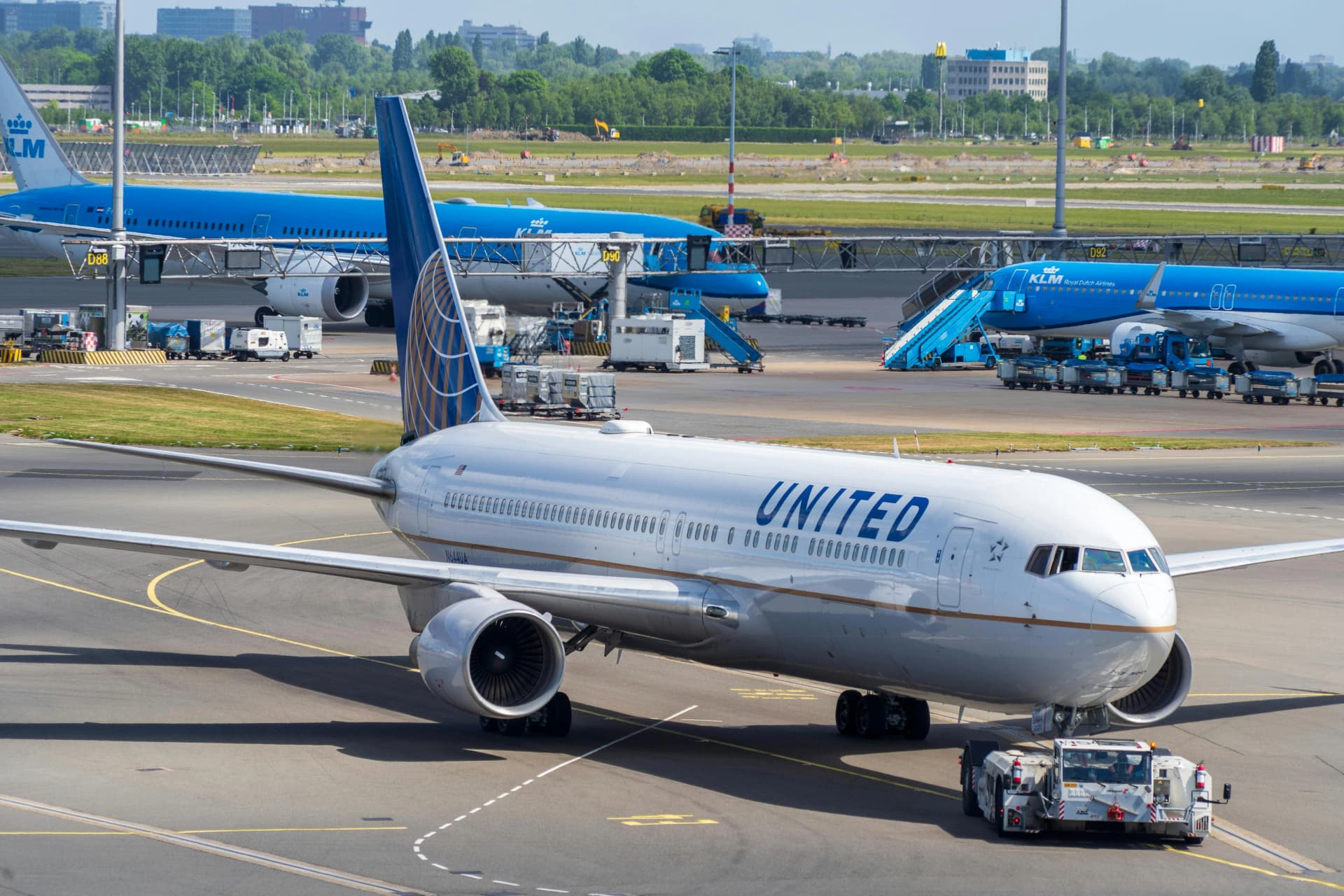
You're sitting on the tarmac. The plane hasn't moved in 2 hours and forty five mins. The pilot announces "only a few greater minutes" for the third time. Do you have rights? virtually—and they may be ruled via specific time home windows most passengers do not know exist.
This guide explains the exact mathematics in the back of US flight put off repayment, the important time thresholds that trigger passenger rights, and the brand new 2024 rules that improve automatic refund protections.
Information US vs. European Flight Rights
US passenger rights work essentially differently from ecu Union guidelines. expertise this distinction prevents confusion while reading international tour advice.
Why the us uses Time-based totally rules
European Union regulation 261/2004 (EU261) presents constant cash reimbursement primarily based on flight distance: €250 for quick flights, as much as €six hundred for lengthy distances. The reimbursement quantity doesn't exchange based totally on postpone period—simplest whether or not the postpone exceeds particular thresholds.
The us takes a extraordinary approach. US department of Transportation (DOT) regulations focus on time-based totally protections rather than distance-based coins repayment. The important thing metric is period: how long you are behind schedule, how lengthy you are caught on the tarmac, and how delayed your rescheduled flight may be.
This creates a device where precise timing subjects extraordinarily. A 2-hour 59-minute tarmac delay triggers extraordinary policies than a three-hour 1-minute postpone. understanding those thresholds enables you know exactly what to anticipate and call for.
The Tarmac postpone Countdown: vital Time windows
Tarmac delays occur when your aircraft is on the ground but can't take off or reach the gate. Those conditions trigger particular passenger protections based on elapsed time.
The 2-Hour Mark: food and Water Required
After 2 hours on the tarmac, airlines must offer:
- Adequate food (if the time of day makes food suitable)
- Potable water
- Operational bathrooms
- Scientific attention if needed
The two-hour clock begins when the aircraft doorways near for departure or when movement at the tarmac starts offevolved, whichever happens final. For arrivals, it starts offevolved when the plane lands and starts taxiing.
Airlines that fail to provide those basics face DOT fines. Every violation can result in penalties up to $37,377 consistent with passenger (as of 2024). This creates robust incentive for compliance.
The 3-Hour Mark: domestic Deplaning possibility
The three-hour rule is the maximum important for home flights. airways need to allow passengers to deplane before the 3-hour mark except:
- The pilot-in-command determines deplaning poses safety or safety dangers
- Air site visitors manage advises that deplaning might disrupt airport operations
These exceptions are slender. Climate on my own would not exempt airways. "we might get clearance soon" would not exempt airlines. the rule of thumb is strict: at or before 3 hours, passengers ought to have the possibility to get off the plane.
Violations bring about considerable fines. In 2021, the DOT fined more than one airlines masses of heaps of greenbacks for tarmac put off violations. airways take this rule significantly.
The four-Hour Mark: international Flight limit
International flights (departing from or arriving at US airports) have a four-hour tarmac delay restrict instead of three hours. The same exceptions apply: safety, protection, or air traffic manage worries.
The greater hour acknowledges that global flights contain greater complex logistics—customs, immigration, worldwide coordination. however the requirement stays firm: passengers must deplane before the four-hour mark.
The guideline of 30: mandatory Updates
Airways need to replace passengers each 30 minutes at some point of tarmac delays. Updates ought to encompass:
- Present day popularity and motive for delay
- Anticipated put off length (if known)
- Whether passengers can have deplaning possibilities
Those updates should be brought thru PA announcement or different communique strategies. The requirement ensures passengers are not left wondering what's going on throughout extended delays.
Involuntary Bumping: The 200% and 400% Rule
while airways oversell flights, they now and again must deny boarding to passengers with showed tickets. if you're bumped involuntarily, federal regulation mandates precise reimbursement quantities.
Calculating Your Bumping reimbursement
Compensation depends on elements: your price tag's one-way fare and the way not on time you will be accomplishing your destination.
Situation 1: Arrival zero-1 hours past due
- Compensation: $0
- airways should nevertheless rebook you, however no cash reimbursement required
Situation 2: Arrival 1-2 hours overdue (home) or 1-4 hours past due (worldwide)
- Repayment: 200% of your one-way fare
- Most: $775 (as of 2024)
- Instance: $300 price ticket = $600 repayment
Situation three: Arrival 2+ hours overdue (home) or 4+ hours past due (worldwide)
- Repayment: 400% of your one-way fare
- Most: $1,550 (as of 2024)
- Example: $400 ticket = $1,550 (hits the cap)
The mathematics uses your one-manner fare despite the fact that you acquire a spherical-ride price ticket. Calculate by way of dividing spherical-ride price through .
Actual instance calculation:
You paid $450 for a round-experience ticket ($225 one-way). The airline bumps you, and your rescheduled flight arrives three hours late.
Step 1: Calculate 400% of 1-way fare
$225 × 4 = $900
Step 2: check in opposition to cap
$900 < $1,550 (under the cap)
End result: You acquire $900 compensation plus your original price tag for later journey.
Voluntary vs. Involuntary Denied Boarding
Airlines first are searching for volunteers willing to take later flights in trade for repayment (frequently tour vouchers or cash). if you volunteer, you negotiate reimbursement immediately—no regulated amounts observe.
Involuntary bumping takes place when inadequate volunteers come ahead. Airways then choose passengers based totally on criteria (often check-in time, fare elegance, or common flier repute). Those involuntarily bumped passengers acquire the mandated 200% or 400% repayment.
Continually check in early to reduce involuntary bumping threat. airways typically bump closing-arriving passengers first.
New 2024 automated Refund rules: What changed
In April 2024, the DOT finalized primary rule updates strengthening passenger refund rights. those adjustments took effect in October 2024 and represent the maximum significant passenger protection enlargement in years.
The Definition of 'big postpone'
The brand new guidelines outline "extensive put off" with precise time thresholds:
Home flights:
- Sizeable delay = 3+ hours from scheduled departure/arrival time
Worldwide flights:
- Good sized delay = 6+ hours from scheduled departure/arrival time
Earlier than those guidelines, airways described "extensive" differently, creating confusion approximately refund eligibility. The standardized definition removes ambiguity.
Whilst airlines have to Refund robotically
Airways should provide computerized refunds (now not vouchers) while:
1. Cancellations or giant delays: Flight is cancelled or extensively delayed (using the 3/6 hour definition above), and the passenger chooses not to just accept rebooking.
2. Agenda adjustments: The flight time table changes drastically, and the passenger would not accept the alternative.
3. Luggage delays: Checked bags are not delivered within 12 hours (home) or 15-30 hours (global, relying on period).
4. Ancillary provider failures: You paid for offerings (WiFi, seat choice, bags) that the airline didn't provide.
The refund must be:
- Computerized (no passenger request required)
- Full amount paid
- Authentic price approach (cash/credit score card, not vouchers)
- Processed within 7 commercial enterprise days (credit playing cards) or 20 days (other payment techniques)
This represents a chief shift. previously, airlines often issued vouchers or required passengers to request refunds. the new guidelines mandate proactive, cash refunds.
Aviation's Hybrid dimension device defined
US aviation makes use of a mix of imperial and metric measurements, plus specific nautical gadgets. knowledge this gadget exhibits why precision subjects in flight operations.
Why Altitude uses feet, no longer Meters
Aircraft altitude is measured in toes above suggest sea stage (MSL) inside the united states of america and maximum of the sector. A industrial flight cruising at "35,000 ft" flies 35,000 toes above sea level.
Why toes in preference to meters? ancient standardization. Early aviation advanced usually in the US and united kingdom, both using imperial measurements. when international aviation requirements shaped, toes became the global standard for altitude.
Exceptions exist: China, Russia, and some former Soviet states use meters for altitude. This creates conversion requirements when flights cross among metric and toes-based totally airspace.
The precision subjects for safety. Vertical separation standards preserve aircraft at distinctive altitudes to prevent collisions. In US airspace, aircraft fly at particular thousand-foot intervals (31,000 feet, 32,000 feet, and so on.). Above 29,000 feet, reduced Vertical Separation minimum (RVSM) lets in 1,000-foot separation rather than 2,000 toes, successfully doubling to be had flight levels.
Knots vs. Miles in keeping with Hour
Aircraft speed makes use of knots—nautical miles in line with hour. One nautical mile equals 1.15078 statute miles (ordinary miles) or precisely 1,852 meters.
Conversion:
- 1 knot = 1.15078 mph
- 100 knots = 115 mph
- 500 knots ≈ 575 mph
Why knots? Navigation. One nautical mile equals one minute of latitude on the earth's floor. This relationship makes navigation calculations simpler. when a chart suggests 60 nautical miles, that equals exactly one degree of latitude.
A Boeing 737 cruises around 450-480 knots (approximately 520-550 mph). Air visitors manipulate communicates all speeds in knots, so pilots must think in this unit regardless of their aircraft's cockpit displays.
Weight and balance: while kilos count
Aircraft weight at once influences gas intake, takeoff performance, and protection margins. US aviation uses kilos for weight calculations.
Crucial weight limits:
- Maximum Takeoff Weight (MTOW): maximum weight at which the plane can correctly take off
- Most landing Weight (MLW): maximum secure landing weight
- Most zero gasoline Weight (MZFW): aircraft weight earlier than adding gasoline
A 10-pound error subjects enormously. On a small standard aviation aircraft:
- 10 more kilos ≈ 0.02 gallons more gasoline consumption in step with hour
- Shifts center of gravity barely
- Reduces useful load by means of 10 pounds
Multiply this throughout hundreds of passengers and load. A Boeing 737 may convey one hundred fifty passengers averaging one hundred ninety kilos every (inclusive of convey-ons), plus checked luggage averaging 30 pounds every. that is 28,500 pounds of passenger weight plus 4,500 kilos of baggage = 33,000 kilos total.
If the airline's weight estimate is off by means of just 5% (1,650 kilos), gas calculations become faulty. The plane would possibly run low on fuel reserves or exceed overall performance limits.
That is why some global airlines now weigh passengers and luggage in my opinion—accuracy subjects for protection and performance.
Maximizing Your repayment: practical pointers
Knowing the policies facilitates, however documentation and education maximize your probabilities of receiving owed repayment.
Report the whole thing
Create a paper path at once whilst delays or cancellations occur:
Record:
- Unique flight statistics (wide variety, scheduled times)
- Real postpone/cancellation time
- Purpose given via airline (climate, mechanical, group scarcity)
- Gate agent names and employee identification numbers
- Guarantees made (meal vouchers, inn, rebooking)
- Out-of-pocket expenses (receipts for meals, accommodations, transportation)
Tools:
- Screenshot your boarding bypass and flight reputation
- Report bulletins (cellphone video with audio)
- Keep all emails and textual content updates from the airline
- Image airport records presentations displaying postpone/cancellation
This documentation proves your case if the airline disputes your compensation declare.
Recognise Your Rights earlier than Flying
Distinctive conditions trigger unique rights:
Controllable delays (mechanical issues, crew scheduling, plane swaps): airways need to offer meal vouchers and hotel hotels for overnight delays.
Uncontrollable delays (weather, air visitors manipulate): airlines ought to rebook you however commonly are not required to offer food or resorts.
Tarmac Delays: three-hour (home) and 4-hour (worldwide) guidelines follow no matter delay purpose.
Cancelled flights: New 2024 rules require automatic refunds in case you don't accept rebooking, regardless of cancellation purpose.
Tip: Credit score card travel protections frequently cowl charges that airways may not. take a look at your card blessings earlier than flying. Many cards offer trip put off coverage, lost luggage insurance, and experience cancellation protection.
The lowest Line: US flight passenger rights perform on precise time thresholds: 2 hours for food and water during tarmac delays, three hours for home deplaning opportunities, four hours for worldwide flights. Involuntary bumping reimbursement scales from two hundred% to four hundred% of your one-way fare based on delay period. New 2024 DOT guidelines require automated refunds for significant delays (3+ hours home, 6+ hours worldwide) with out requiring passenger requests. information those actual timeframes and compensation formulation enables you understand whilst airlines owe you cash or offerings. always document delays, realize your credit score card protections, and familiarize yourself with these policies before visiting.
Disclaimer: This article gives instructional facts approximately US passenger rights regulations as of 2024-2026. Aviation policies exchange periodically, and character occasions range. Airline policies may additionally exceed DOT minimal requirements. For modern-day respectable information, seek advice from the united states department of Transportation Aviation customer protection department. This content is for academic purposes best and does no longer represent felony advice. specific situations may additionally contain elements now not covered here. continually affirm present day rules and discuss with qualified professionals for character instances.